Islamic Geometric Patterns: The Geometry Behind Them
The star-and-polygon patterns on mosques and manuscripts follow a handful of elegant rules. Understand the rules, and you can generate — and laser-cut — your own.
By Randall Morgan — founder of LaserBurn AI.
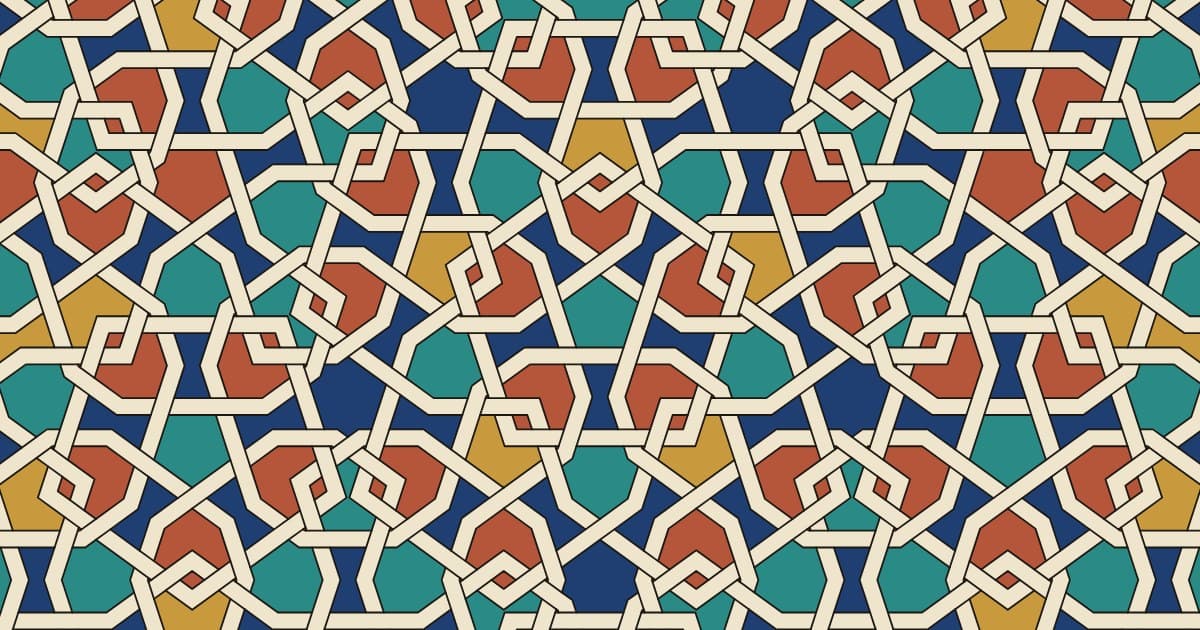
Islamic geometric patterns are among the most sophisticated ornamental systems ever devised — interlacing stars and polygons that repeat across tile, wood, stone, and paper without ever quite repeating the way your eye expects. What looks impossibly intricate is actually built from a small set of rules a compass and straightedge can follow. This guide walks through how those patterns work, and how to make your own with a free browser tool.
A brief background
From roughly the 9th century onward, craftsmen across the Islamic world developed geometric ornament into a high art, covering the walls of mosques, palaces, and madrasas from Spain to Central Asia. Because figural imagery was often avoided in religious settings, geometry and vegetal arabesque became the primary visual language — and geometry, in particular, was pushed to extraordinary levels of complexity.
The patterns are frequently called girih, from the Persian word for “knot,” describing the continuous interlaced lines — the strapwork — that weave through the design.
How the patterns are built
Despite their apparent complexity, most Islamic geometric designs come from a few repeatable ideas:
- Star polygons. A regular polygon's points are connected in a repeating step — every second, third, or fourth vertex — to form the characteristic 6-, 8-, 10-, 12-, and 16-pointed stars.
- Polygons in contact. The classic construction method places regular polygons edge to edge; lines drawn across each shared edge at a consistent angle grow into the interlaced pattern. This is the technique that makes seams line up automatically.
- Strapwork. Those lines are drawn as continuous, over-and-under woven bands — the “knots” that give girih its name and its sense of endless motion.
- Rosettes and medallions. Concentric rings of stars radiate from a center point to build the large circular medallions seen on domes and doorways.
- Tessellation. A single unit cell tiles the plane, so the pattern can extend seamlessly across any surface.
There's a remarkable modern footnote: in 2007, physicists Peter Lu and Paul Steinhardt showed that some 15th-century girih tilings anticipate quasiperiodic (Penrose-like) geometry by centuries — patterns with long-range order that never exactly repeat. Medieval designers had, in effect, discovered a kind of mathematics the West wouldn't formalize until the 1970s.
A gallery of girih styles
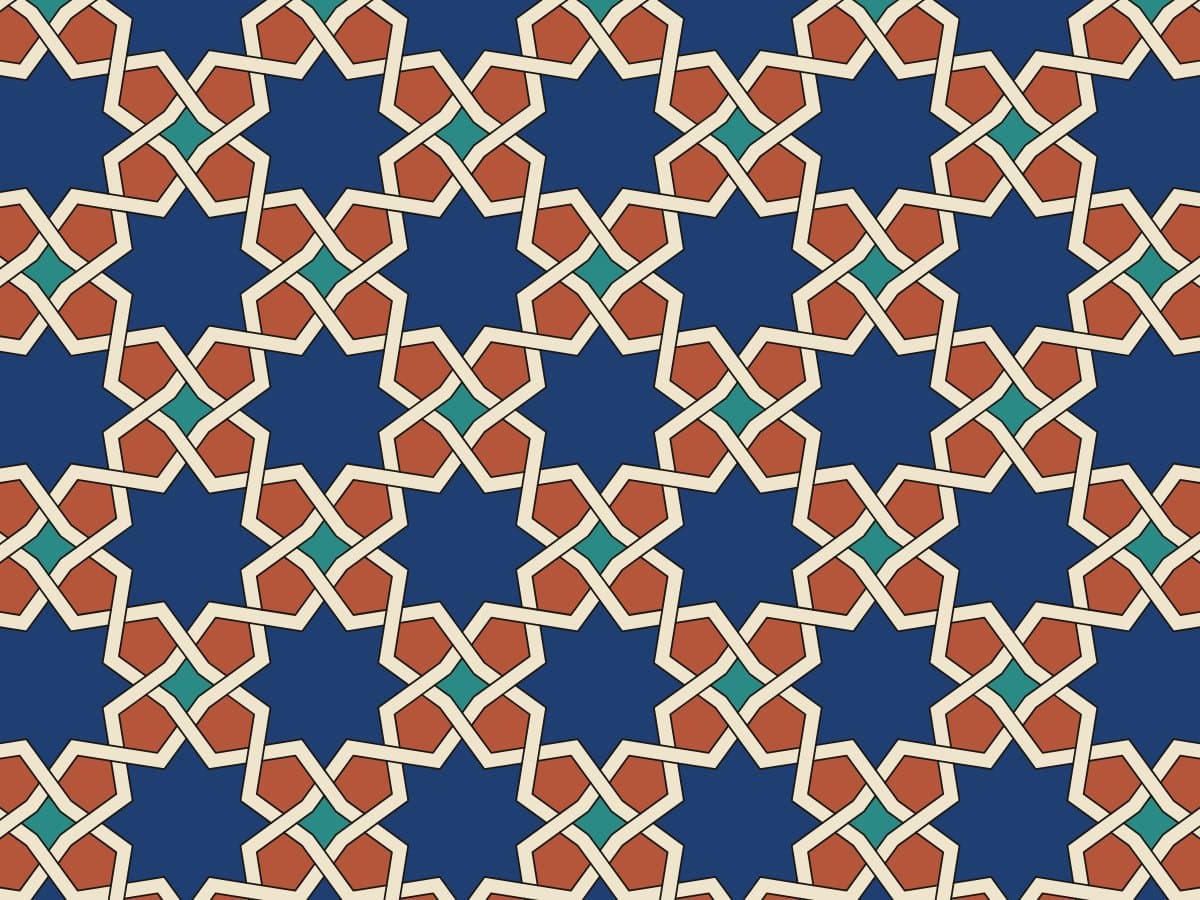
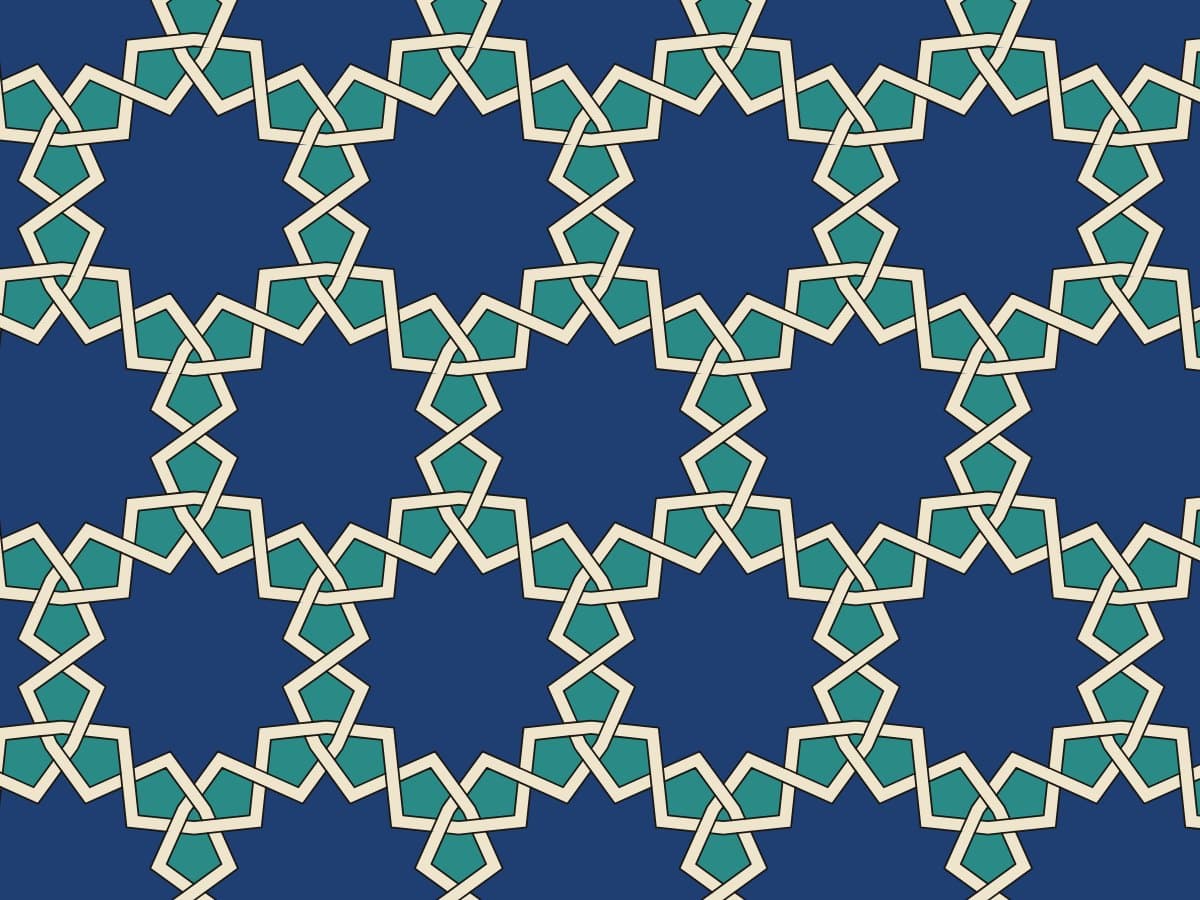
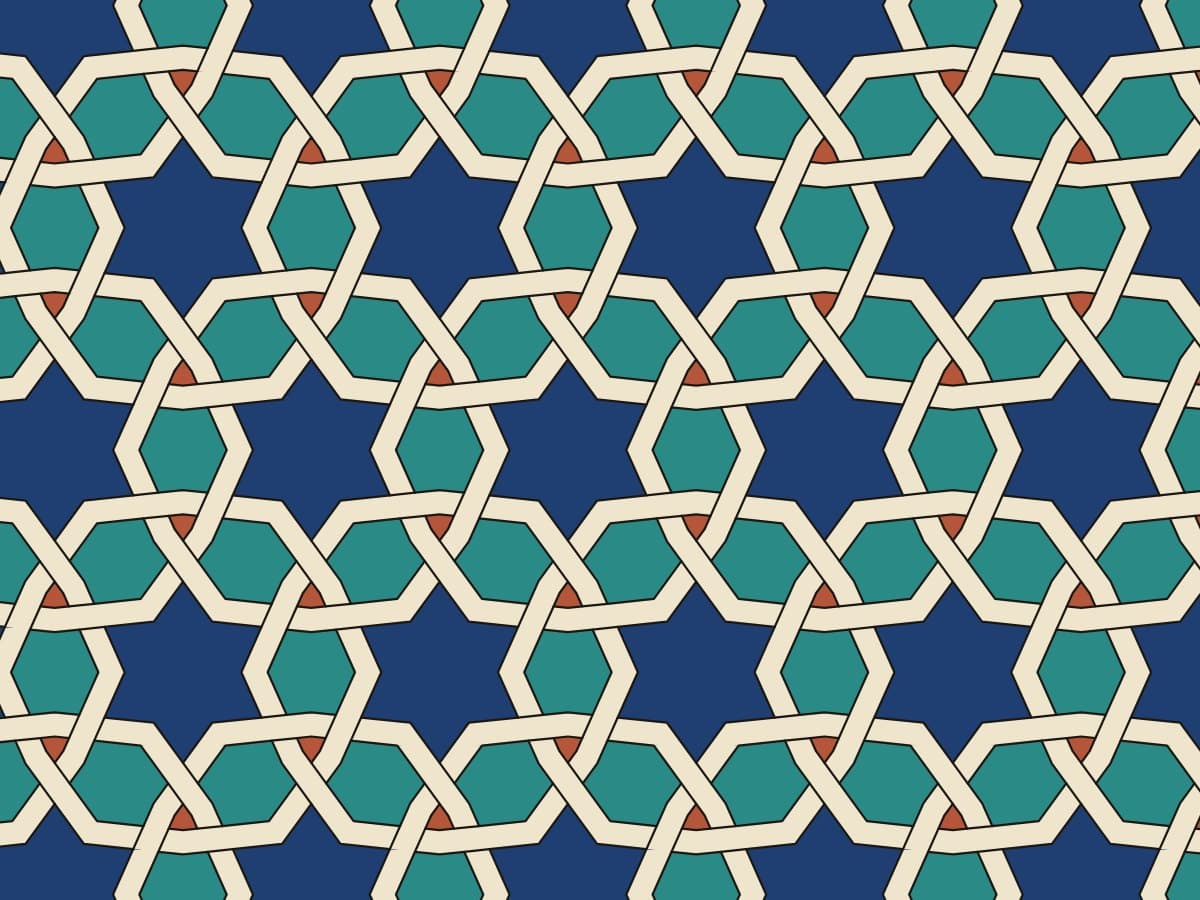
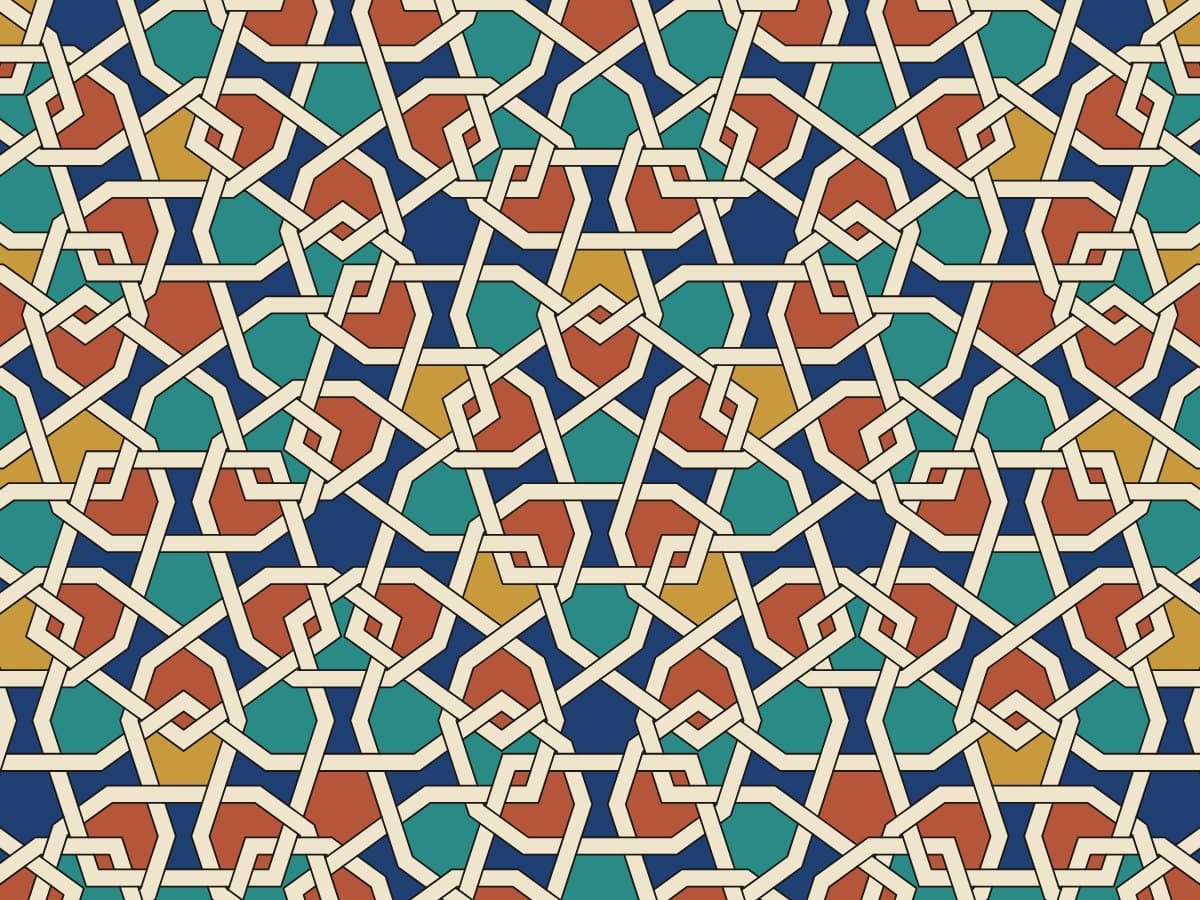
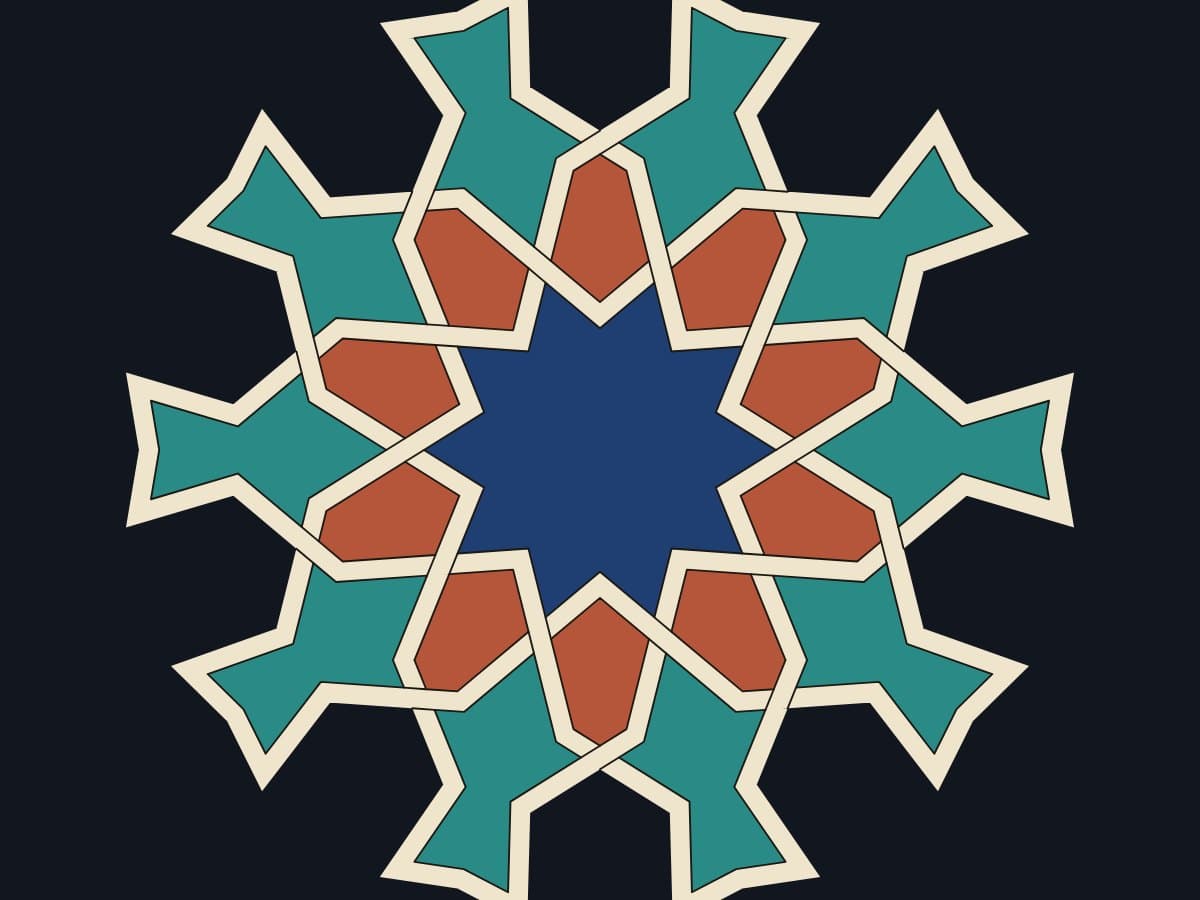
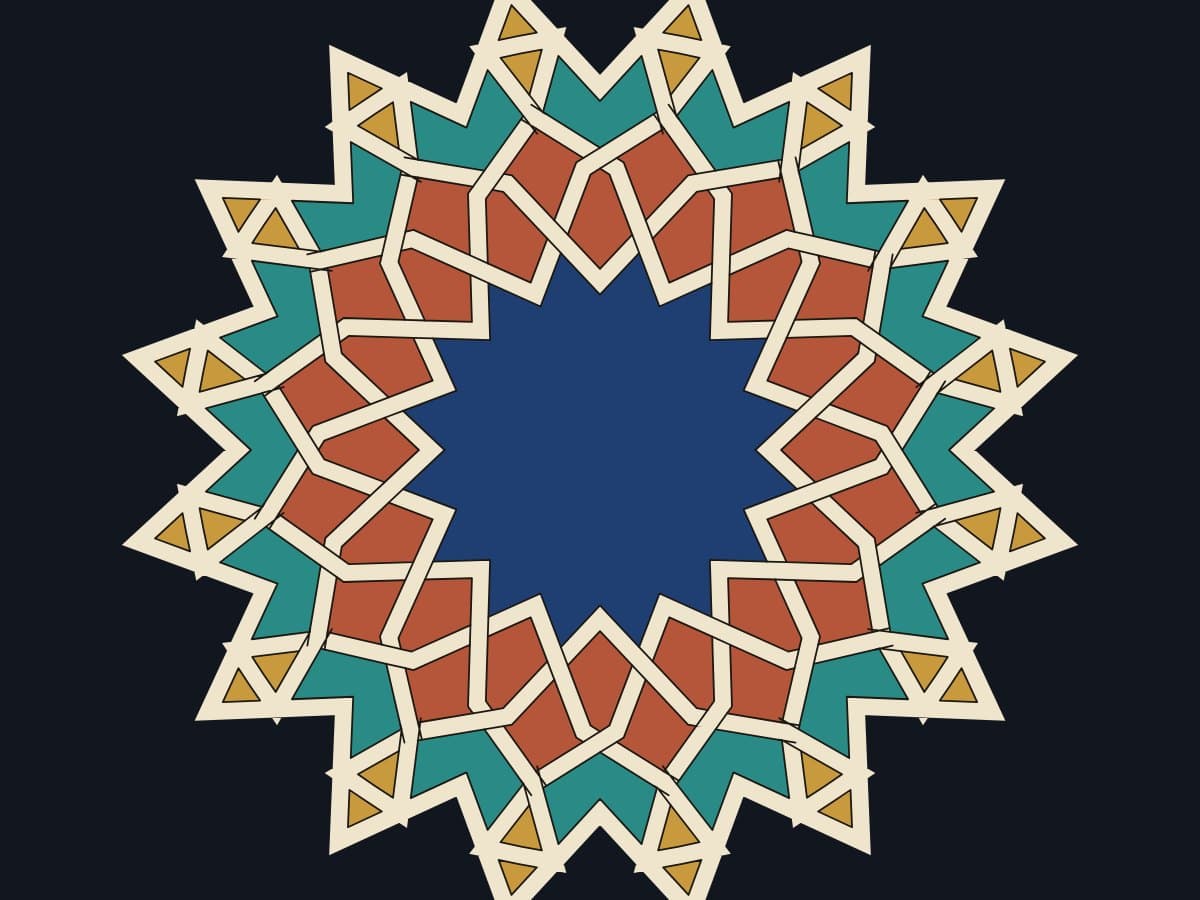
These aren't stock illustrations. The geometry of every pattern below, including the over-and-under interlace, comes straight from the browser-based Ornament Studio; the spaces between the bands are filled with traditional tile colors to show how the strapwork reads as finished ornament. Each represents a different family of Islamic geometric design.
Make your own — no compass required
You can construct these by hand with a compass and straightedge, and it's a genuinely rewarding exercise. But if you want to produce patterns — for laser cutting, engraving, screen printing, or just wallpaper — a generator does the geometry for you. Our free-to-design Ornament Studio builds authentic patterns right in the browser:
- Tileable girih panels that repeat seamlessly for borders and large fields.
- Aperiodic 8- to 18-fold quasicrystals: Penrose and girih tilings grown by substitution, plus de Bruijn's multigrid for 8-, 12-, 14-, 16- and 18-fold fields and medallions.
- Star rosettes in orders 5 through 16, with adjustable density and rings.
- Medallions with a border and an optional hanging hole — ready to cut as a finished piece.
Everything previews live and exports at true real-world scale, so a design you like on screen is the size it cuts on the machine. Designing and previewing is free; a one-time $49 unlock turns on the laser-ready SVG/DXF exports and project save.
Cutting and engraving these patterns
- Engrave the strapwork. The woven lines look stunning scored or engraved into wood or acrylic — the default, and the most forgiving.
- Cut it through for screens. The Studio's cut-lattice option turns the strapwork into real closed ribbons you can cut all the way through for lamps, room dividers, and window screens.
- Mind the fine points. Sharp star tips are delicate in thin material. The tool flags features that are too small for your kerf before you cut, so a fragile design doesn't become firewood.
Frequently asked questions
What is the difference between girih and arabesque?
Girih refers to the interlaced geometric patterns built from stars and polygons. Arabesque usually describes the flowing vegetal ornament — stylized leaves and vines. They often appear together, but girih is the geometric system.
Are Islamic geometric patterns hard to make?
By hand they take practice with a compass and straightedge. With a generator like the Ornament Studio you get authentic, correctly-constructed patterns in seconds and can export them ready to cut or print.
Why do the patterns never seem to repeat?
Many are periodic but so densely interlaced that the repeat is hard to see. Others are genuinely quasiperiodic — they have order without exact repetition, which is part of what makes them so mesmerizing.
Ready to make your own? Open the Ornament Studio or browse our other free laser cutting tools.