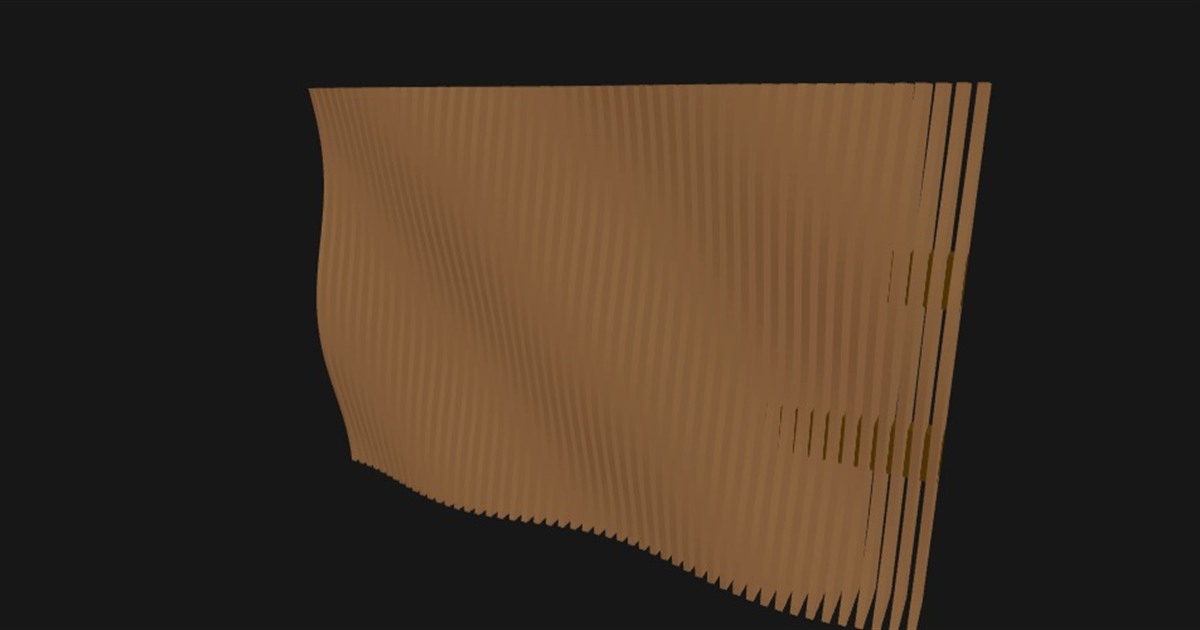
Living Hinge Generator
Make a flexible laser-cut panel from plywood, MDF or acrylic. Pick a pattern and your material, and the cuts, bridges and row spacing are sized for it. Download a free SVG or DXF in real millimetres. No signup, and it all runs in your browser.
Pattern
Material
The forgiving choice. Birch ply flexes hundreds of times.
Panel Size
28 rows · cuts 18 mm · bridges 2.4 mm
Set by the material and thickness. Kerf compensation grows the outline by half the kerf so the panel cuts at exact size; the slits need none.
How much hinge do I need?
Hinge band needed: 33.8 mm (angle/360 × 2π × (R + t/2))
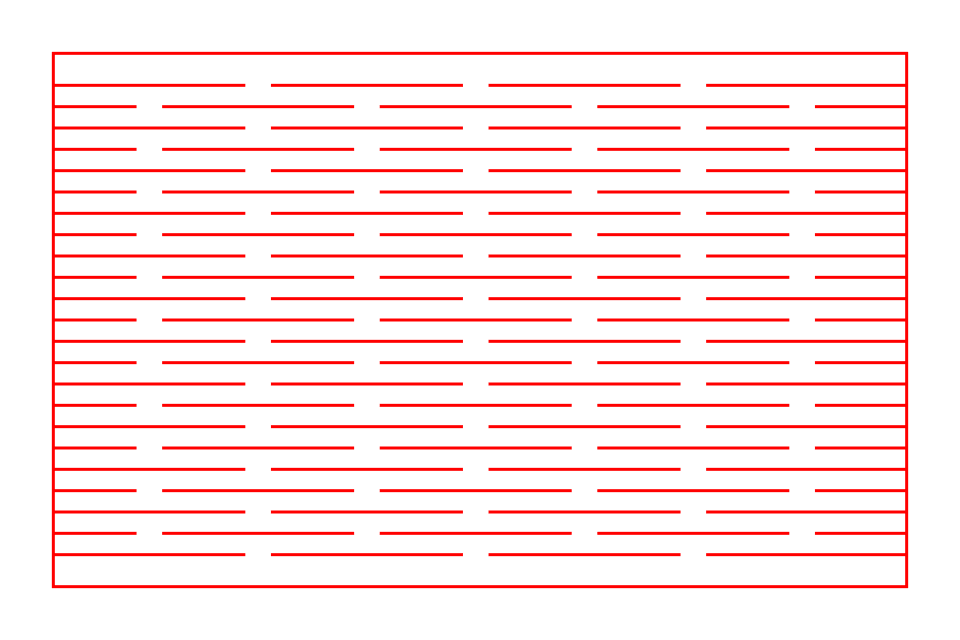
The SVG imports at true size in LightBurn, xTool Creative Space and Glowforge. Everything is a red hairline cut, outline included. The DXF has the same geometry on a CUT layer for RDWorks and CAD.
100 mm × 60 mm · bends along the height
How to design a living hinge
- Pick the material and thickness. They set the bridge width, cut length and row spacing, which matter far more than the pattern.
- Size the panel. Width runs along the cuts. Height is the length that bends: use the calculator to get it from your bend angle and radius.
- Choose a pattern and download. Straight is the safe default. Cut a small test piece first in any new material.
Each row of cuts is offset by half a cut from the next, so the uncut bridges never line up. The strips between rows become short torsion bars: bend the panel and every one twists a little. Longer cuts give longer bars and more flex. Wider bridges are stronger but stiffer. That is why the tool sizes both from the thickness instead of making you guess.
Nine living hinge patterns, all free
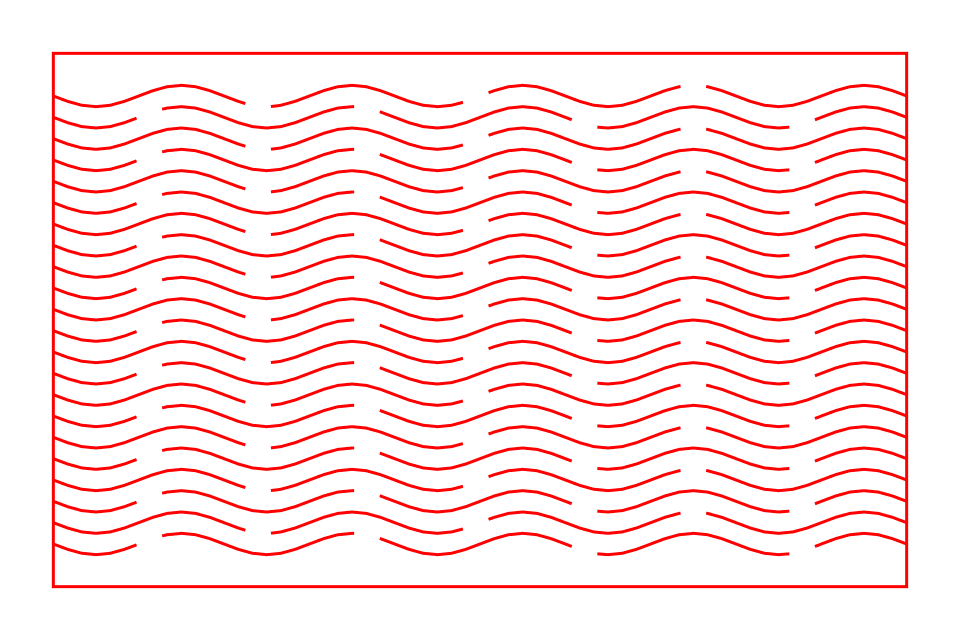
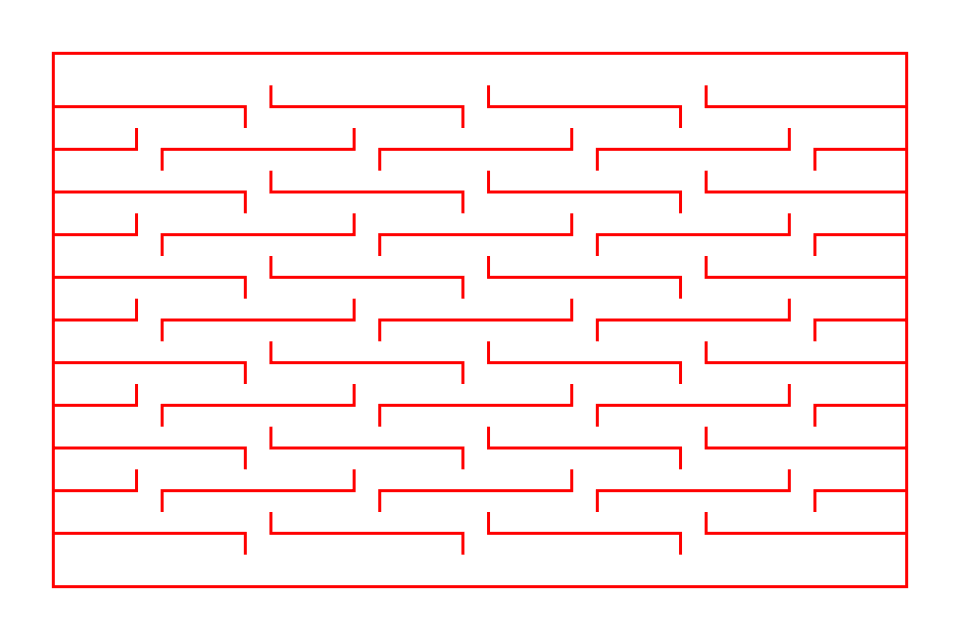
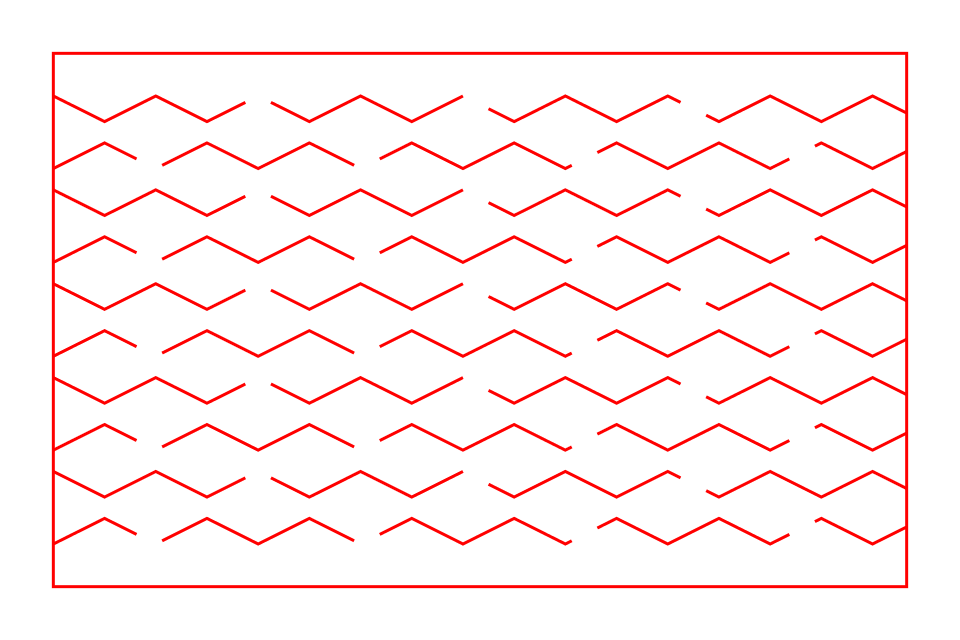
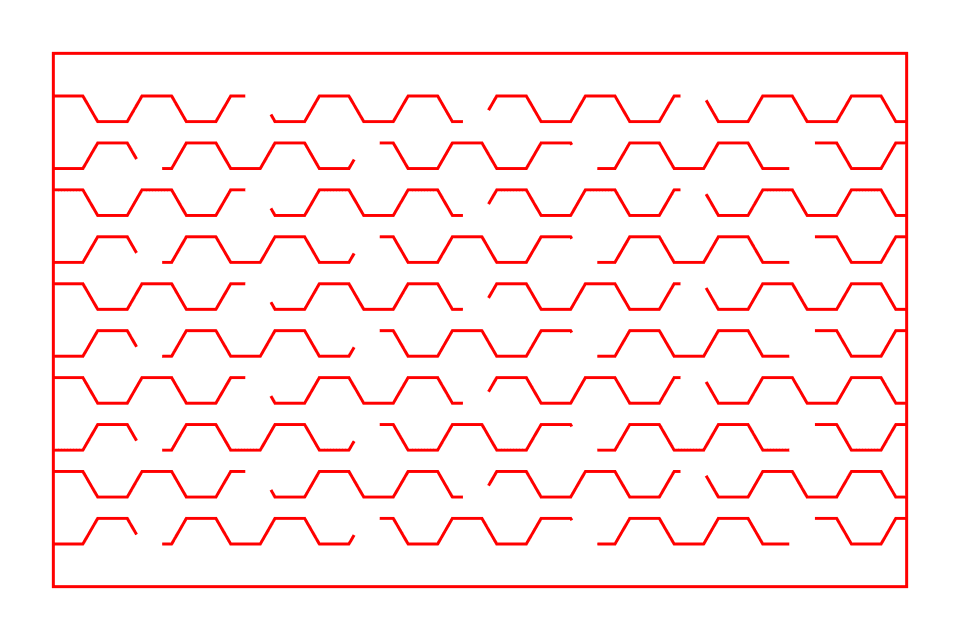
Every pattern below is drawn by the generator itself for an 80 × 50 mm panel of 3 mm plywood. The two-way patterns bend along both the width and the height.
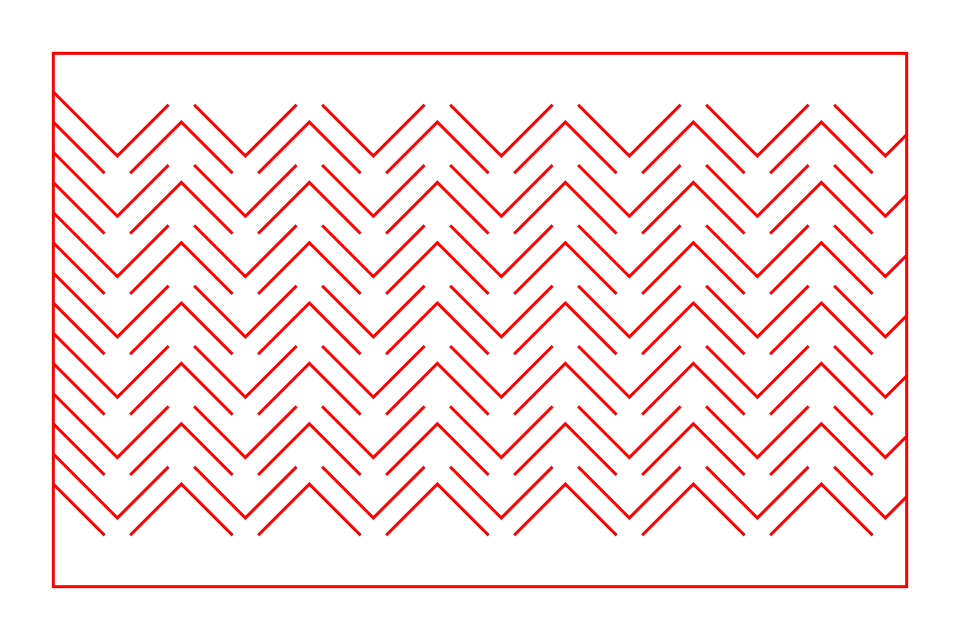
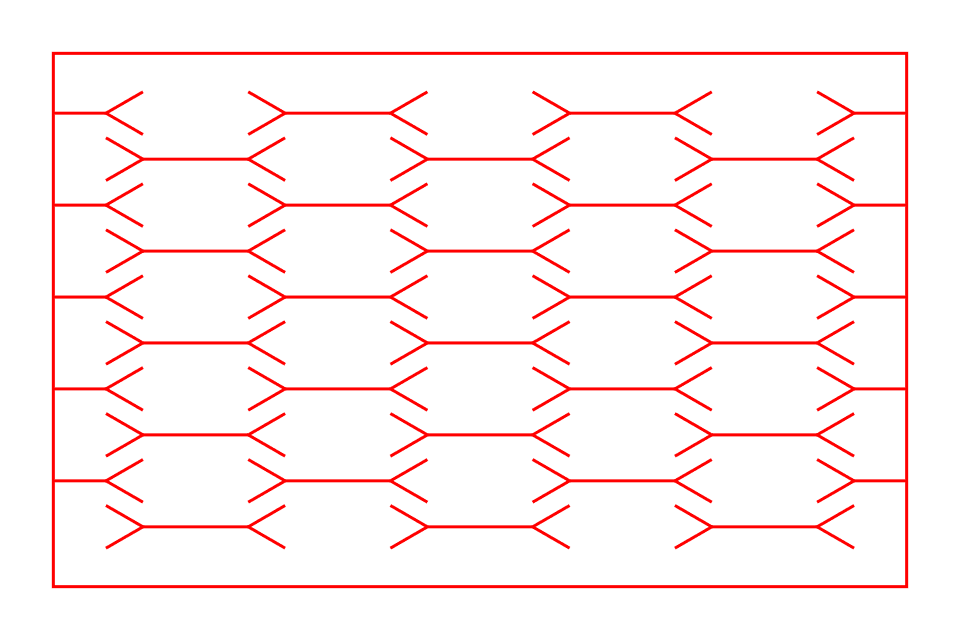
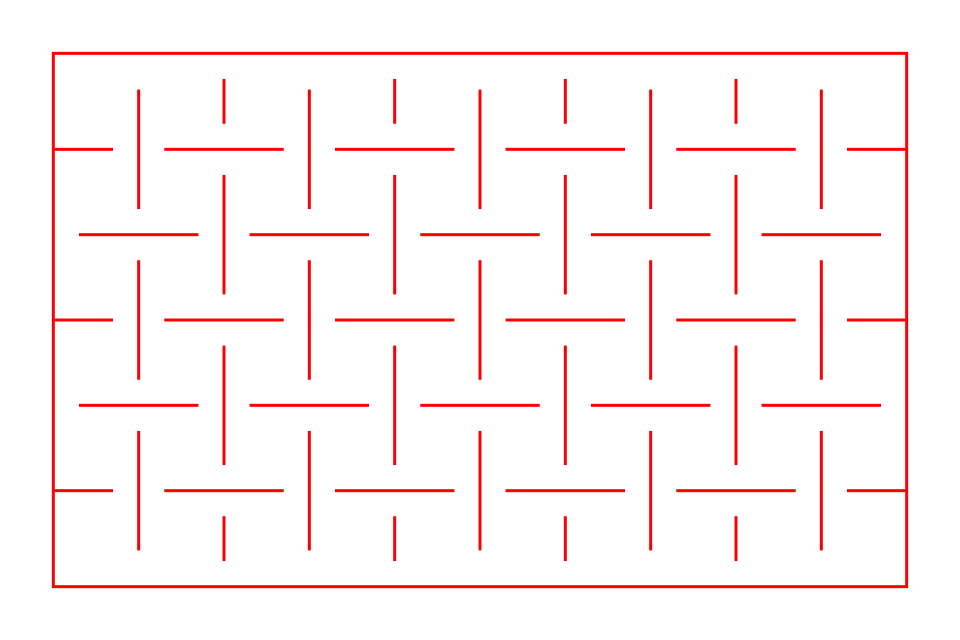
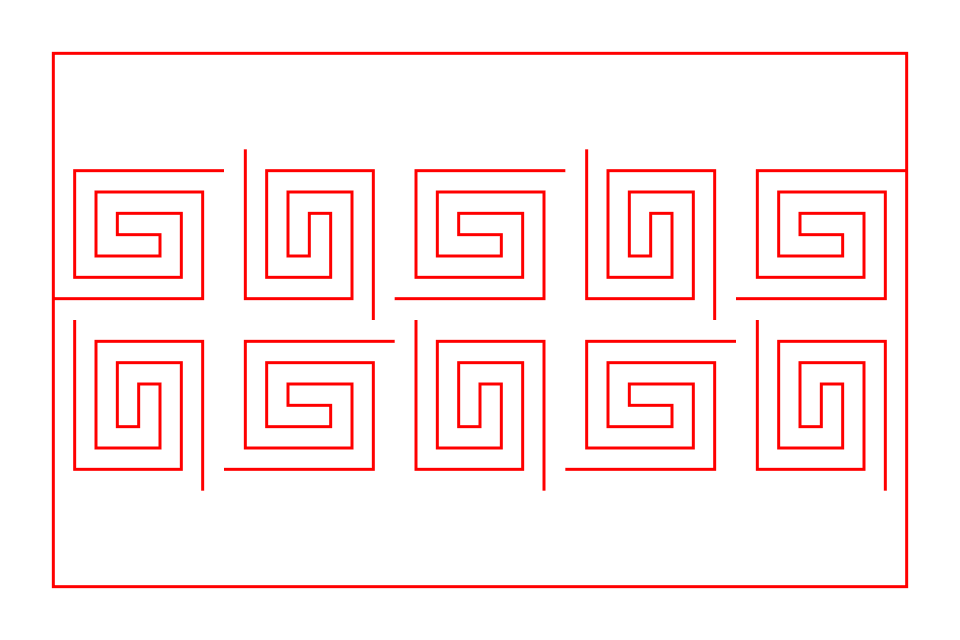
Two-way living hinges: auxetic and maze
A normal living hinge bends one way, like a page turning. Auxetic and maze patterns bend both ways, which lets a flat sheet follow a gentle compound curve: a shallow bowl, a dome, or a lamp shade that curves top to bottom as well as around.
- Auxetic cuts a grid of slits, horizontal and vertical in a checkerboard. The sheet becomes small squares that pivot on thin ligaments, so it stretches as well as bends. The ligament width comes from your material.
- Maze tiles square double spirals, turned in a pinwheel. Each spiral is a coiled spring, and the lanes between them zigzag instead of running straight across, so no stiff bar is left in either direction.
- Every piece stays attached. No cut touches another, and no cut runs out through an edge more than once, so nothing can fall out of the panel.
Bend radius and hinge length
A living hinge doesn't stretch. The cut band simply wraps the curve, so it must be as long as the arc: length = angle / 360 × 2π × (inside radius + thickness / 2). For a 90° box corner with a 20 mm inside radius in 3 mm ply that is about 34 mm of hinge, plus a solid margin above and below.
How tight you can go depends on the material. The radii below are rules of thumb, not guarantees: grain, glue and moisture vary from sheet to sheet, so bend a test strip first.
Best materials for living hinges
| Material (3 mm) | Bridge | Cut length | Row spacing | Smallest radius | Notes |
|---|---|---|---|---|---|
| Plywood | 2.4 mm | 18 mm | 2 mm | ~15 mm | The forgiving choice. Birch ply flexes hundreds of times. |
| MDF | 2.7 mm | 18 mm | 2.3 mm | ~24 mm | Bends once into a fixed curve. No grain, so bridges crumble if flexed repeatedly. |
| Acrylic | 3 mm | 24 mm | 2.4 mm | ~45 mm | Brittle. Use a gentle radius; warming it with a heat gun helps. |
Cutting a living hinge in LightBurn, xTool or Glowforge
- Import at true size. The SVG is in millimetres. Check the dimensions after import; don't rescale it, or the bridges and spacing change.
- Cut the slits first, the outline last. In LightBurn, turn on "Cut inner shapes first" in Optimization Settings so the panel doesn't shift before its hinge is finished.
- Use just enough power. Extra power widens the kerf and eats into the strips. Air assist keeps the narrow slits from charring.
- Bend it gently the first time, along the height of the panel. Plywood loosens up after a few flexes.
Living hinge boxes
Want a box with a lid that folds over on a living hinge? The free box generator builds finger-jointed boxes with a hinged-lid option. It uses the same brick-pattern hinge, sized to the lid.
FAQ
What is a living hinge?
A living hinge, or kerf bend, is a pattern of short parallel cuts that lets a flat sheet of plywood, MDF or acrylic bend. The cuts leave thin strips joined by small uncut bridges. When you bend the panel, each strip twists a little, and hundreds of small twists add up to a smooth curve.
Is the living hinge generator free?
Yes. All nine patterns, including the two-way auxetic and maze hinges, the bend calculator, and both SVG and DXF downloads are free with no account and no daily limit. The pattern is built in your browser, so nothing is uploaded.
How long does the hinge need to be?
The cut band has to be as long as the arc it wraps: length = angle / 360 × 2π × (inside radius + thickness / 2). A 90° corner with a 20 mm inside radius in 3 mm ply needs about 34 mm of hinge. The calculator in the tool works this out and can size the panel for you.
How tight can a living hinge bend?
It depends on the material more than the pattern. As a rule of thumb, birch plywood bends to an inside radius of about 5 times its thickness, MDF about 8 times, and acrylic about 15 times. Cut a short test strip in your own material before committing a full sheet.
Which pattern should I use?
Straight is the classic and the most predictable. Wave flexes the same with a softer look. Spring joint hooks make the loosest bend, at the cost of wider rows. Diamond and honeycomb mirror their rows so the solid material forms a chain of diamonds or hexagons, and chevron nests arrowheads into a herringbone. All three look good on the outside of a box or lamp. Cross forks the end of every cut so the material between rows becomes short diagonal springs. Auxetic and maze flex in two directions.
Can a living hinge bend in two directions?
Yes, with the auxetic and maze patterns. Auxetic is a grid of slits that turns the sheet into small squares pivoting on thin ligaments, so it stretches and bends both ways. Maze tiles square double spirals in a pinwheel, so the material between them works like a mesh of springs. Both can follow gentle compound curves such as a shallow bowl or dome. They are less forgiving than a straight hinge, so cut a test piece first.
Can you make a living hinge in acrylic?
Yes, but acrylic is brittle. The tool widens the bridges and lengthens the cuts for acrylic. Keep the radius gentle, bend slowly (warming it with a heat gun helps), and treat it as a one-time bend rather than a hinge that opens and closes.
Do I need kerf compensation?
Not for the slits: the laser simply cuts along each line. Kerf compensation only grows the outline by half the kerf so the panel comes out at the exact size you typed. Leave it off unless the part has to fit something precisely.
Does it work with LightBurn, xTool and Glowforge?
Yes. The SVG is sized in millimetres, so it imports at true size in LightBurn, xTool Creative Space and Glowforge. Every line is a red cut line. The DXF is R12 with the same geometry on a CUT layer for RDWorks and CAD software.